River-Edge Foundations Along Stones River
Readyville sits where the East Fork of Stones River bends through low rolling country at the western edge of Cannon County. Properties along the river – the older homestead lots off Old Woodbury Pike and the side roads following the river bottoms – sit on alluvial soils deposited over geologic time. These soils are deeper and more compressible than the thin clay over limestone that characterizes higher ground on the surrounding ridge tops, and the difference shows up directly in foundation behavior. River-bottom homes settle slowly and uniformly across decades, but localized differential settlement appears wherever alluvium meets bedrock at the floodplain edge.
Pre-War Stone Foundations in Cannon County
The historic core of Readyville includes a meaningful number of pre-1930 farmhouses on locally quarried limestone foundations, often laid up dry or with minimal lime mortar. These foundations have stood for nearly a century but show predictable deterioration: stone displacement where individual blocks have shifted, mortar washing where it was used, and the gradual sinking of corner stones into damp clay. The stabilization approach involves careful resetting of displaced stones, repointing with lime mortar compatible with the original work, and selective underpinning where individual piers have lost bearing.
Crawl Space Moisture and Stones River Humidity
The proximity to the river drives high regional humidity and elevates the seasonal water table in low-lying Readyville properties. Crawl spaces in the older homestead housing stock were built without vapor barriers and frequently flood during prolonged wet stretches, producing the slow-progress problems that destroy pier-and-beam foundations: rotted sill plates, fungal growth on joists, corroded fastener hardware, and joist deflection over time. The fix involves drainage to daylight where topography permits, sump pump installation where it does not, and proper vapor barrier placement to interrupt the moisture cycle.
Modern Construction on Cleared Pasture
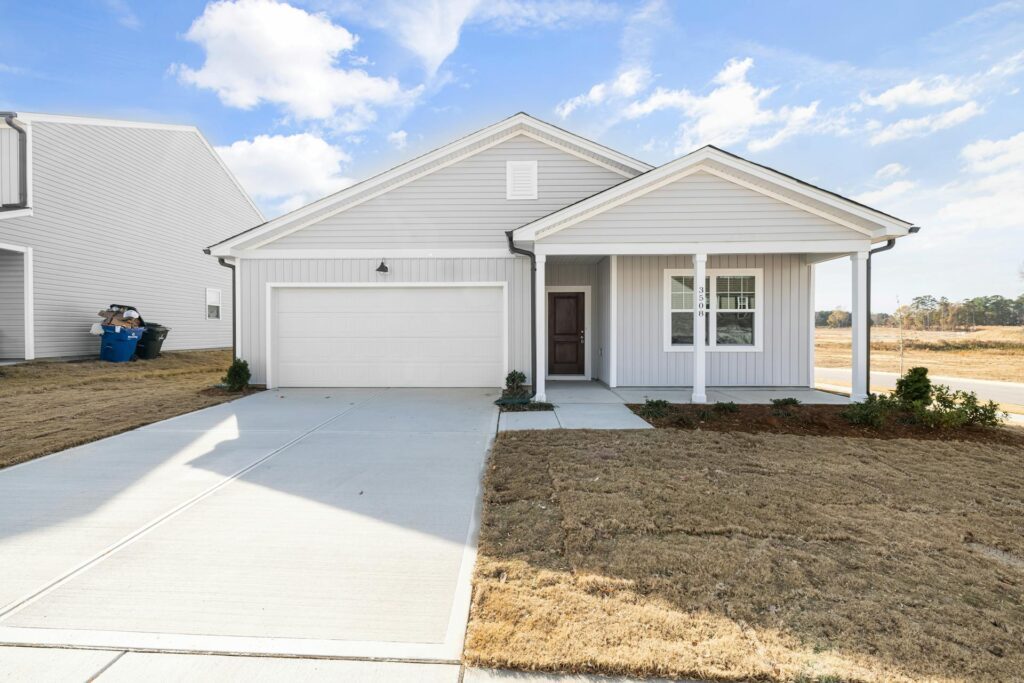
The newer Readyville homes – built since 2000 on subdivided rural acreage off Bradyville Pike and the side roads heading south toward Cannon County – are typically slab-on-grade or shallow crawl space construction on cut-and-fill pads. These homes show the same fill-side settlement signature that affects similar construction across Middle Tennessee: garage corner drops, brick veneer cracks above the garage opening, and slab edge separation on the downhill elevation.
Indicators on Older Homestead Construction
- Stone displacement on dry-laid limestone foundations
- Wet crawl space conditions year-round near the river
- Sill plate rot above damp pier construction
- Joist deflection on long unsupported spans
- Mortar washing on pointed stone walls
- Settlement of individual corner stones into damp clay