Pier-and-Beam Realities in Older Lascassas Homes
The historic core of Lascassas – properties along Lascassas Pike, Hall’s Hill Pike, and the side roads winding through the older homestead acreage – is heavily weighted toward pier-and-beam construction. Pre-1960 farmhouses and bungalows in this part of Rutherford County rest on stone, brick, or early CMU piers, often with intermediate wood posts that have weathered seventy years of crawl space humidity. Post failures, sill rot, and joist deflection are the dominant repair scenarios on this housing stock, and the right intervention is rarely a wholesale foundation replacement.
Sister Joists and Beam Support
When floor sag in a Lascassas farmhouse traces to the joist itself rather than the pier below it, sistering is usually the correct repair: a new dimensional lumber joist bolted alongside the original to share the load and stiffen the span. Sister joists are particularly common in homes where moisture has weakened the original framing without progressing to outright structural failure. Where the beam between piers is the real problem, supplemental jack posts or a new built-up beam from below restore proper bearing without disturbing the floor above.
New Slab Construction on Subdivided Acreage
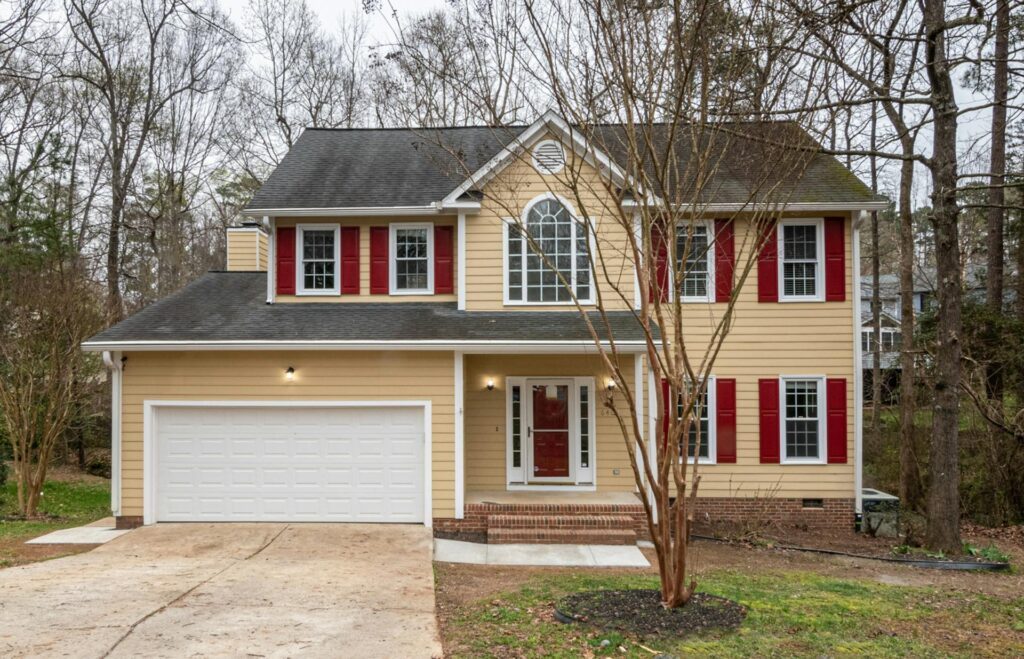
The newer Lascassas homes – subdivision pockets and acreage lots developed after 2000 along Compton Road, the side roads off Hall’s Hill Pike, and the smaller subdivisions south of Lascassas Pike – are slab-on-grade with poured stem walls. The grading practices here mirror what is seen across rural Rutherford County: cut-and-fill on rolling lots, with fill-side settlement showing up five to ten years post-construction. Hairline cracks above garage door openings and slab edge separation from brick veneer are the early indicators.
Soil Profile and Bedrock Depth
Soils across Lascassas are predominantly Mimosa silty clay loam and Hampshire silt loam, with bedrock typically within ten to twenty feet of the surface. The clay content is enough to drive seasonal shrink-swell behavior, but the relatively shallow bedrock keeps total settlement amplitudes modest compared to deeper alluvial soils elsewhere in the county. The repair calculus reflects that: helical piers, when needed, can usually find competent bearing within a reasonable depth without the deeper installations sometimes required closer to Stones River.
Indicators on the Lascassas Housing Stock
- Floor sag near load-bearing interior walls in older farmhouses
- Visibly leaning or settled pier in the crawl space
- Wood rot or fungal growth on sill plates above piers
- Bouncy or springy floor framing on long unsupported spans
- Hairline cracks above garage door openings on newer slab homes
- Brick veneer separation from the slab on the back-of-lot elevation