Two Generations of Foundations on US-231
Christiana housing splits into two distinct populations. The first is the pre-war farmhouse stock – balloon-framed homes on stone or early CMU pier-and-beam foundations, often with a partial root cellar dug under the kitchen. The second is the post-2000 build-out on subdivided agricultural land, slab-on-grade or shallow crawl space construction set on former pasture. The diagnostic patterns are completely different. A 1925 farmhouse foundation problem usually traces to a stone pier that has weathered, settled into clay, or lost mortar; a 2008 slab problem usually traces to backfill consolidation or downspout erosion.
Clay Behavior East of Murfreesboro
Soils east of Murfreesboro along the US-231 corridor are dominated by Mimosa and Talbott series clays, which expand significantly during wet stretches and shrink-crack during dry ones. The expansion-contraction cycle is what drives the seasonal door binding pattern that Christiana homeowners describe – doors that latch fine in October, bind in March, and latch fine again in August. The problem is rarely the door; it is the slab or pier system flexing as the underlying clay swells and recedes.
Old Stone Piers and the Kitchen Floor
Older Christiana farmhouses, particularly those built before about 1940 along Burnt Knob Road and the older sections of Bradyville Pike, sit on stone or early concrete piers spaced six to eight feet apart under the main beams. When one of those piers loses bearing – either by sinking into damp clay or by the stone itself crumbling – the floor above it sags. Sister joists, jack posts, and helical pier underpinning are the typical fixes, depending on whether the issue is the pier or the joist.
Newer Slabs on Former Pasture
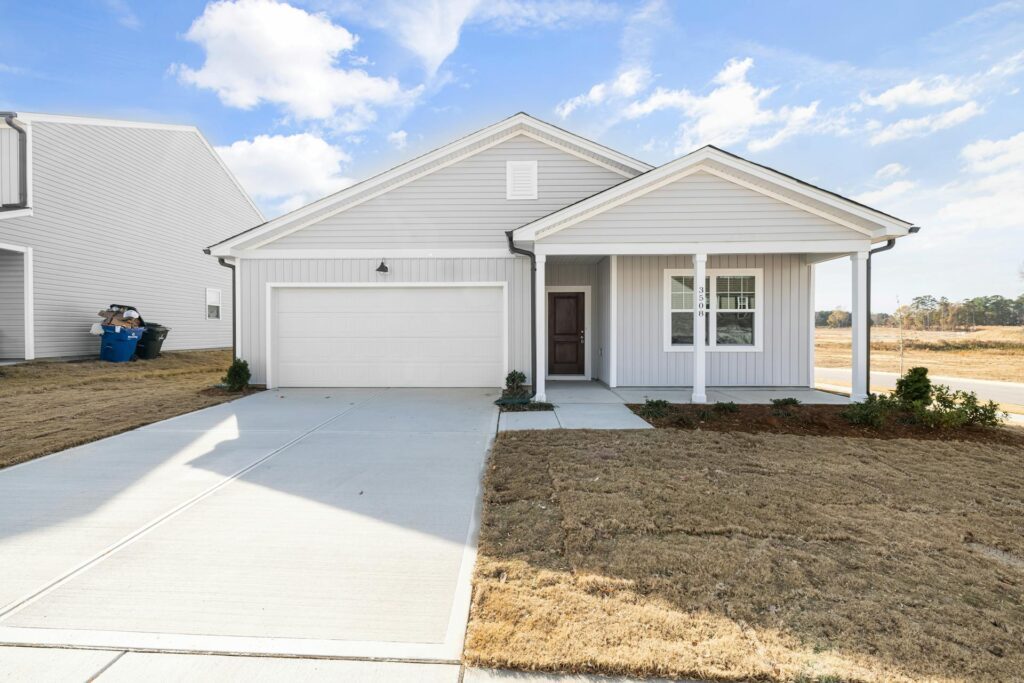
The newer side of Christiana – subdivisions off Hoovers Gap Road and the homes built after the late 1990s along Woodbury Pike – rest on cut-and-fill grading where former pastureland was reshaped for foundation pads. Compaction-during-construction was variable, and homes built on poorly compacted fill commonly show settlement during years three through seven. The signs include slab edge separation from brick veneer, diagonal cracks above garage door openings, and floor slope toward an exterior wall.
Signs Worth Investigating
- Floor sag of more than half an inch over a six-foot span in a farmhouse
- Loose stone or visibly tilted pier under a beam
- Mortar joint cracking on early CMU foundation walls
- Slab edge gaps where brick veneer separates from the foundation
- Doors and windows that bind only during specific seasons
- Wet stains on stone foundations after heavy rain