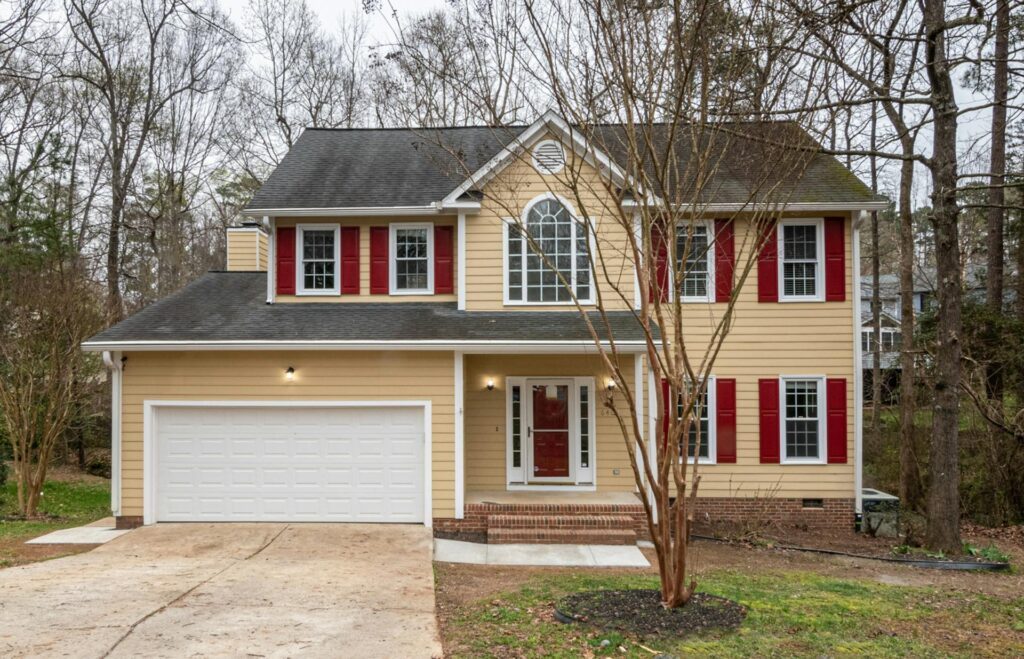
Slab-on-Grade Becomes the Standard
Blackman’s housing is overwhelmingly slab-on-grade construction built between 1995 and 2020 across former farmland west of Manson Pike, north of Burnt Knob Road, and along Veterans Parkway. The era’s standard package – poured monolithic slab, conventionally reinforced, with brick veneer over wood frame – is the dominant pattern in subdivisions like Indian Hills, Cason Lane Estates, and the developments off Manson Pike near Blackman High School. When problems show up, they tend to follow the era’s predictable failure modes rather than the older, more varied patterns seen in established neighborhoods.
Karst Topography Beneath the Manson Pike Corridor
The bedrock under Blackman is shallow Ordovician limestone, often within five to fifteen feet of the surface. Karst features – solution channels, sinkholes, and pinnacled bedrock – are documented throughout west Murfreesboro. During subdivision construction, sinkholes were often filled with crushed stone and capped, but those repairs sometimes settle decades later when groundwater finds a new path. The signature is a slab corner that drops one to two inches over a few years while the rest of the house remains stable.
Cut-and-Fill Pads on West Side Subdivisions
Many Blackman subdivisions sit on rolling former agricultural land that was graded flat for foundation pads, which means the original ground has been cut on the high side and filled on the low side. Homes positioned over fill – typically the back-of-lot elevations in subdivisions that step down a hillside – are at higher risk of differential settlement. The compaction of structural fill during boom-era construction was inconsistent, and ten to fifteen years later, lots that received deeper fill commonly show measurable settlement on the fill side of the house.
Voids Under the Slab
Polyurethane foam injection is frequently the right intervention for Blackman slab problems before piers are even discussed. Where a void has opened under a slab corner because of soil consolidation, fill settlement, or downspout erosion, lifting the slab back to grade with structural foam is faster, less invasive, and often cheaper than driving piers. Piers become the right answer when the underlying support layer is too deep or too compressible for foam to bridge.
Common Patterns in Blackman Homes
- Hairline diagonal cracks running off slab corners through brick veneer
- Slab edge separation from brick on the back-of-lot elevation
- Hollow-sounding tile or hardwood near a re-entrant corner
- Garage slab that has dropped relative to the house slab
- Seasonal door binding that worsens year over year
- Drywall ceiling cracks above interior load-bearing walls