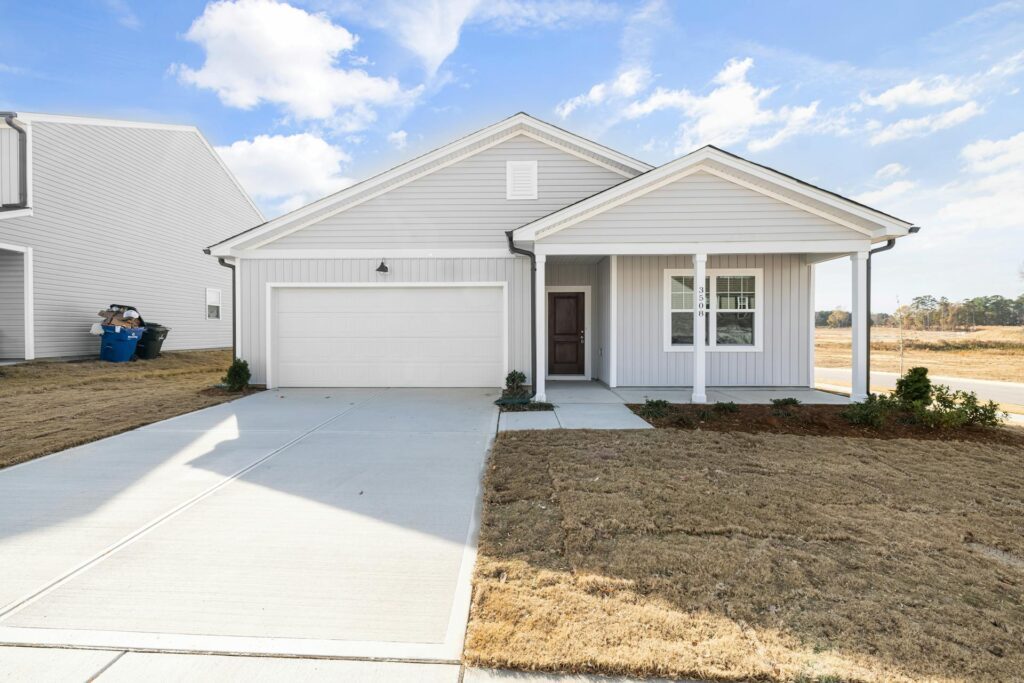
Bridgemore and the Modern Custom Estate
The Bridgemore subdivision and the surrounding gated and equestrian developments along Arno-College Grove Road set the pattern for newer College Grove construction: large custom homes, often four to six thousand square feet, on multi-acre lots with crawl space or basement foundations rather than slab. The complex floor plans and long footprint geometries of these homes mean that even small differential settlement between sections can produce noticeable signs – drywall cracks above interior doorways, sticking French doors, and brick veneer cracks at re-entrant corners.
Equestrian Acreage and Pre-War Foundations
The older College Grove housing stock – properties along Cox Pike, Bear Creek Road, and the back roads through the equestrian sections – includes meaningful numbers of pre-1940 farmhouses on stone or brick pier-and-beam foundations. Many of these have been carefully maintained within working horse properties, but the same pier-and-beam failure modes apply: localized pier settlement, mortar joint deterioration, sill rot above poorly ventilated crawl spaces, and joist deflection from the cumulative effect of decades of moderate moisture.
Williamson County Soils on Sloping Sites
The College Grove area sits on Hampshire and Mimosa series soils over Ordovician limestone, with bedrock typically twenty to forty feet below the surface in the valleys and within ten feet on ridge crests. The variation shows up on sprawling estate footprints because different parts of the same house may bear on substantially different soil columns. A wing built over a deeper valley soil section can settle more than a wing built over near-surface bedrock, producing the kind of differential movement that ranch-style homes on uniform soil rarely show.
Surface Water on Multi-Acre Properties
Drainage on College Grove properties depends on yard grading and natural drainage paths rather than the urban downspout problem. The signature failure pattern involves cross-property sheet flow concentrating at the uphill side of the home during prolonged rain. Without an interceptor swale or proper grading, water saturates the soil column adjacent to the foundation, drives hydrostatic pressure on basement walls, and over years causes the cyclic differential settlement that produces stair-step cracking.
What Estate Owners Report
- Drywall cracks at re-entrant corners of complex floor plans
- French doors that bind seasonally on the downhill side
- Horizontal cracking on tall poured basement walls
- Floor slope between wings of long-footprint homes
- Wet basement after extended rain on uphill foundations
- Pier settlement in older farmhouse crawl spaces